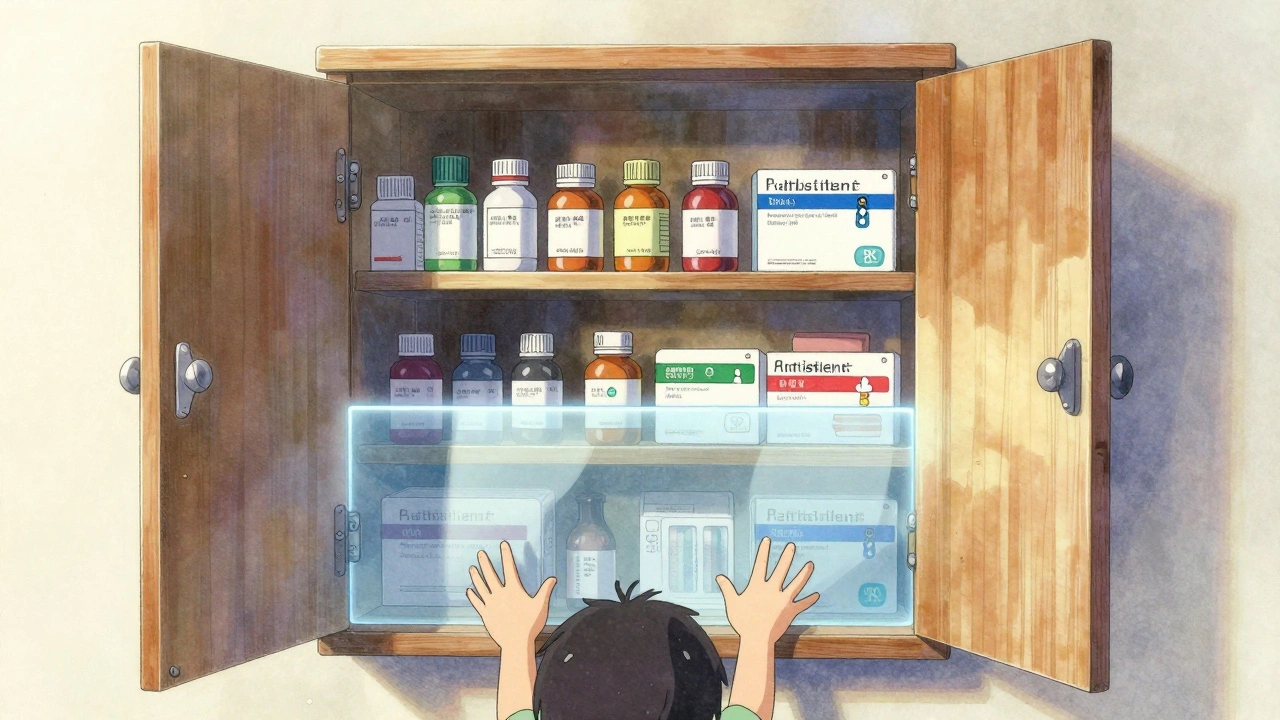
Learn how to safely store OTC medicines at home to prevent accidental poisoning, teen misuse, and expired drug risks. Step-by-step guide for families with kids and teens.
Read MoreOTC Medicine Cabinet: What to Keep, What to Avoid, and How to Stay Safe
When we talk about an OTC medicine cabinet, a storage space for over-the-counter medications used for everyday health issues like pain, allergies, or colds. Also known as a home pharmacy, it’s the first place people turn when they feel off—not a hospital, not a clinic, just a drawer or shelf within reach. But a messy or outdated OTC medicine cabinet isn’t just clutter—it’s a risk. People don’t realize how many accidental overdoses, bad interactions, and expired pills are sitting right there in plain sight.
That’s why knowing what belongs in your cabinet matters. Over-the-counter medications, drugs you can buy without a prescription, like pain relievers, antihistamines, and acid reducers are safe when used right—but dangerous when mixed wrong. For example, taking multiple products that all contain acetaminophen can quietly damage your liver. Or keeping old antibiotics from last year’s cold? They won’t help this time, and they might make future infections harder to treat. Even something as simple as storing pills in the bathroom? Moisture and heat kill potency fast. You wouldn’t leave milk out in the sun—don’t do it with your medicine.
Then there’s the hidden problem: drug interactions, when two or more medications affect each other’s safety or effectiveness. A common painkiller might seem harmless, but if you’re also taking a blood pressure pill or a supplement like milk thistle, you could be setting yourself up for trouble. And don’t assume that just because it’s sold on a shelf, it’s safe for everyone. Kids, seniors, people with kidney issues—they need different rules. The same bottle that helps your neighbor sleep might make you dizzy or raise your blood pressure.
What should you actually keep? A few essentials: pain relievers like ibuprofen or acetaminophen (in child-safe packaging if you have kids), antihistamines for allergies, antacids for heartburn, hydrocortisone cream for rashes, and a thermometer. Keep the original boxes and labels. Write the date you opened each bottle. Toss anything past its expiration date—especially liquid antibiotics, eye drops, or insulin. And never store medicines where a child can reach them, or where heat and humidity live—like above the stove or in the bathroom.
Many of the posts below show how easy it is to mess this up. One person took green coffee extract with their ADHD meds and ended up with a spike in blood pressure. Another kept their insulin in a hot car and lost its power. Someone else didn’t realize their generic pill looked different from the brand—and stopped taking it, thinking it wasn’t the same. These aren’t rare mistakes. They happen every day.
Your OTC medicine cabinet isn’t just storage. It’s your first line of defense. When it’s organized, current, and smartly stocked, it keeps you safer, saves you money, and helps you avoid trips to the ER. The articles ahead show you exactly what to stock, what to throw out, how to read labels like a pro, and how to avoid the most common—and most dangerous—mistakes people make with their home meds. You don’t need to be a pharmacist to get this right. You just need to know what to look for.