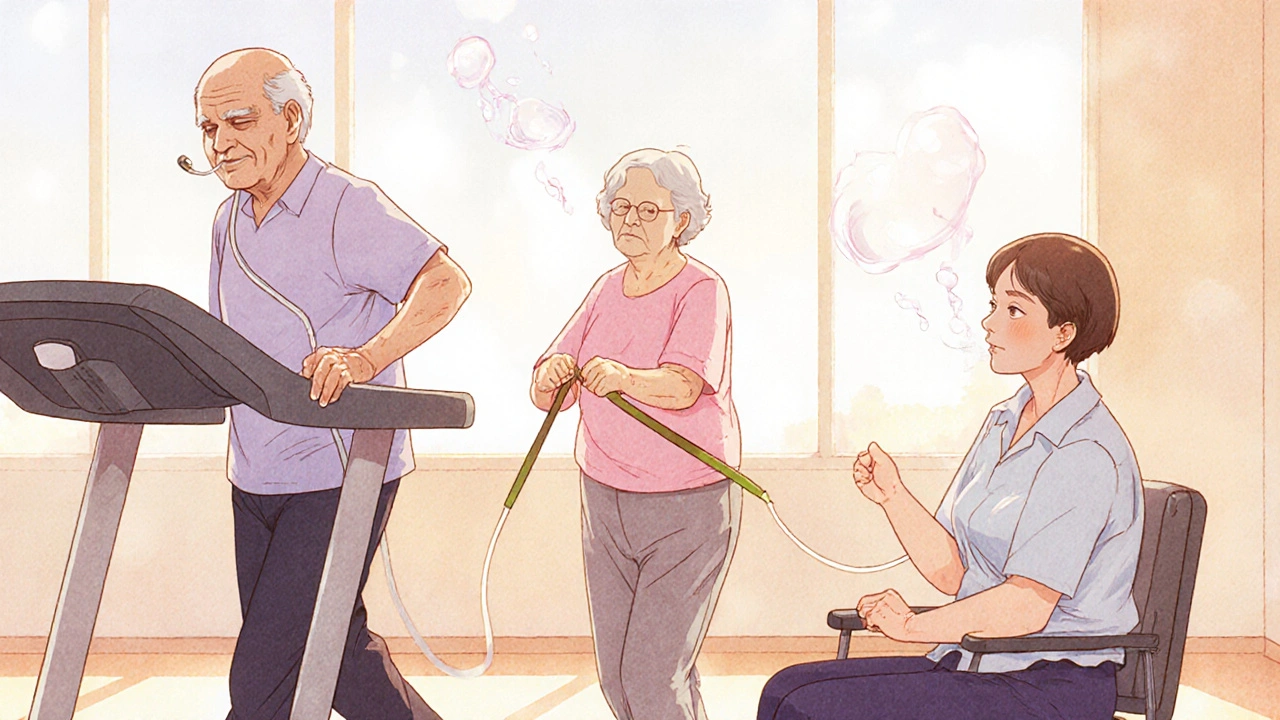
Pulmonary rehabilitation improves breathing, movement, and quality of life for people with chronic lung diseases like COPD and pulmonary fibrosis. It combines exercise, education, and support-backed by strong clinical evidence.
Read MorePulmonary Rehabilitation: What It Is and How It Helps Lung Patients
When your lungs don’t work like they used to, everyday tasks like walking to the mailbox or climbing stairs can leave you breathless. That’s where pulmonary rehabilitation, a structured program designed to improve breathing and quality of life for people with chronic lung conditions. It’s not a cure, but it’s one of the most effective ways to take back control. Also known as lung rehab, it combines exercise, education, and support to help you move better, feel stronger, and live more independently.
Pulmonary rehabilitation isn’t just for people with COPD—it helps anyone with long-term breathing problems, including pulmonary fibrosis, severe asthma, or even those recovering from lung surgery. The program is built around your limits, not your diagnosis. You’ll work with physical therapists who teach you how to breathe efficiently, nutritionists who help you avoid weight gain that strains your lungs, and counselors who understand the frustration of constant shortness of breath. It’s not about running marathons; it’s about being able to shower without stopping, play with your grandkids, or sleep through the night without gasping.
Behind every successful rehab plan is data. Tests like spirometry, a simple breathing test that measures how much air you can push out and how fast. It’s the go-to tool for tracking lung function over time and DLCO, a test that checks how well your lungs transfer oxygen into your blood. These aren’t just numbers—they show whether your rehab is working or if your meds need tweaking. If your DLCO is low, it might mean your lung tissue is stiff. If your spirometry numbers drop after a few months, your doctor might adjust your oxygen or suggest a different exercise routine.
What you won’t find in a rehab program is magic pills or quick fixes. But you will find real progress: people who used to need oxygen just to walk to the kitchen now walk half a mile. People who avoided social events because they feared an attack now join group walks. The science backs this up—studies show pulmonary rehab reduces hospital visits by up to 40% and improves survival rates in COPD patients. It’s not optional for many; it’s essential.
Below, you’ll find real guides on how lung function tests like spirometry and DLCO are interpreted, what to expect during rehab, and how medications, diet, and even storage of inhalers can impact your breathing. Whether you’re newly diagnosed, helping a parent, or managing years of lung disease, these posts give you the clear, no-fluff facts you need to make smarter choices every day.