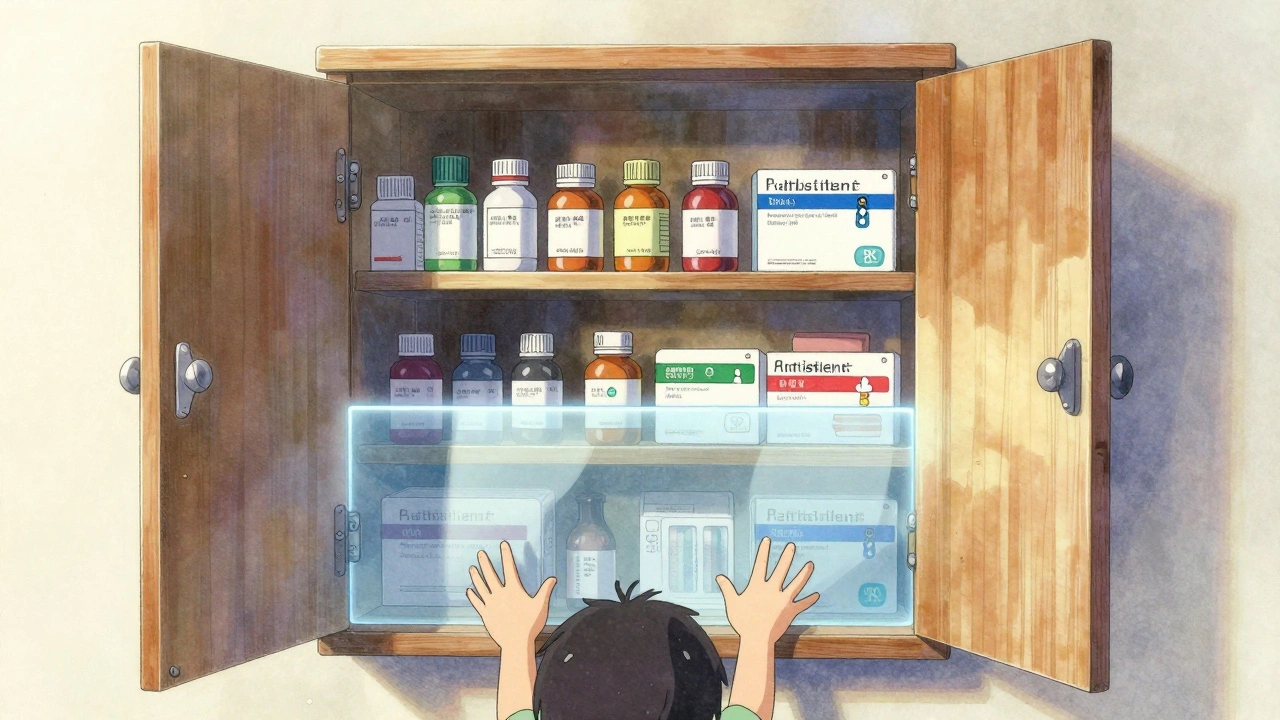
Learn how to safely store OTC medicines at home to prevent accidental poisoning, teen misuse, and expired drug risks. Step-by-step guide for families with kids and teens.
Read MoreSafe Medicine Storage: Keep Your Pills Effective and Out of Harm's Way
When you think about safe medicine storage, the practice of keeping pharmaceuticals in conditions that preserve their strength and prevent accidental access. Also known as proper drug storage, it’s not just about keeping bottles out of sight—it’s about protecting your health from hidden risks like moisture, heat, and curious children or pets. Many people store pills in the bathroom cabinet, thinking it’s convenient. But that’s one of the worst places. Humidity from showers can break down active ingredients, making your blood pressure med or antibiotic less effective—or even unsafe. The same goes for leaving them in a hot car or on a windowsill. drug stability, how well a medication maintains its chemical structure over time under specific conditions depends on temperature, light, and air exposure. The FDA and manufacturers test this carefully, and ignoring those conditions wastes money and puts you at risk.
Think about medication storage, the system of keeping drugs in environments that match their labeled requirements. Most pills are fine in a cool, dry place like a bedroom drawer or a kitchen cabinet away from the stove. Some require refrigeration—like certain insulin types or liquid antibiotics—and that’s non-negotiable. If your doctor or pharmacist says to refrigerate it, don’t assume it’s optional. And never store medicines in their original blister packs inside a pill organizer unless you’re using them immediately. That exposes them to air and light, which can degrade them faster. Also, keep all meds in their original containers with the label intact. That’s not just for you—it’s for emergency responders, pharmacists, or poison control if something goes wrong. prevent expired medicine, taking steps to avoid using drugs past their effective date due to improper storage isn’t about fear—it’s about science. A study from the University of Michigan found that improperly stored medications lost up to 30% potency in just six months under humid conditions.
You also need to think about store pills properly, the simple, daily habits that ensure your medications remain safe and effective. Lock up opioids, benzodiazepines, or any controlled substances. Even over-the-counter drugs like ibuprofen or cough syrup can be dangerous if taken by kids or teens. A child’s accidental overdose is often linked to a bottle left on a nightstand or in an unlocked cabinet. Use child-resistant caps, but don’t rely on them alone. Keep a list of all your meds—doses, reasons, and expiration dates—and check it every six months. Toss out anything you haven’t used in a year, or that’s past its date. Don’t flush them unless the label says to. Many pharmacies take back old meds. If not, mix them with coffee grounds or cat litter, seal them in a bag, and throw them in the trash. That’s the safest way to keep them out of water systems and off the streets.
What you’ll find below are real, practical guides from people who’ve been there—how to handle insulin in summer heat, why the medicine cabinet isn’t your friend, how to travel with meds safely, and what to do when you find an old bottle in the back of a drawer. These aren’t theory pieces. They’re fixes for real mistakes people make every day. And they can save you from a trip to the ER, a wasted prescription, or worse.